

Blog

Back in the good old days, when students still received a basic grant that was more than enough to leave you with a monthly budget even after paying rent for your room, I studied general economics for six years. It took me a little longer than necessary because—well, first of all, that’s just what people did back then; second, because I did an internship and then worked at the Ministry of Economic Affairs; and third, because I took quite a few extra courses. Oh, and fourth, because I found a number of exams so interesting, so to speak, that I took them twice. During those six years of extra courses, a couple of centuries’ worth of accumulated economic wisdom poured over me, but as a young master’s student, I had never heard of export credit insurance. It’s an intriguing term, actually—it consists of no fewer than three nouns strung together. Let’s take a closer look at that.
Exports
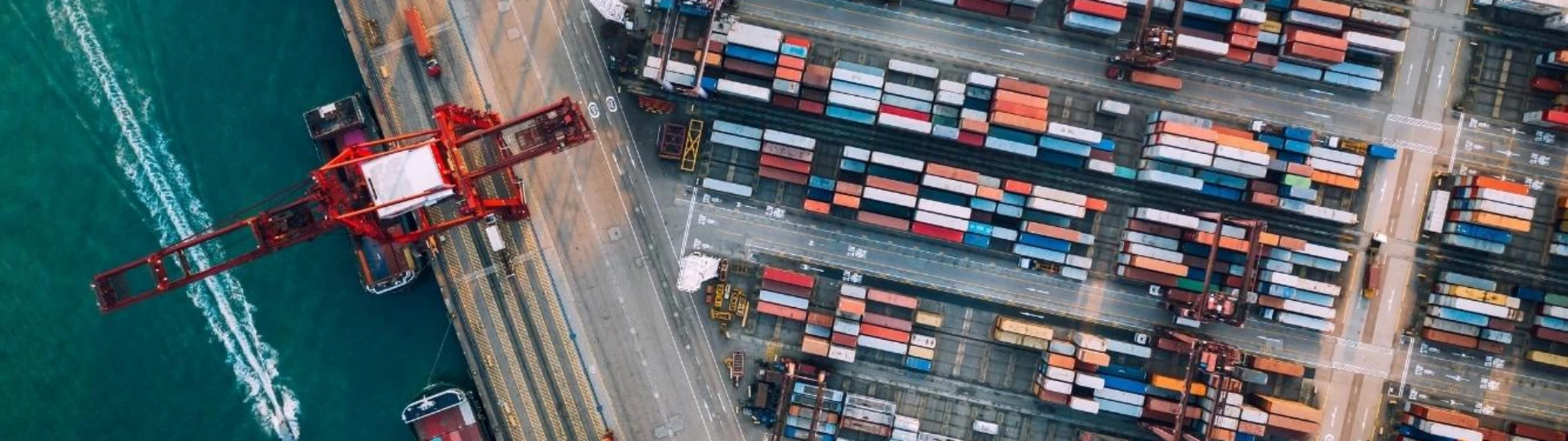
Exports: I was familiar with that concept as a general economist. Back in high school, I learned from the equation—which I can still recite even in my sleep—Y=C+I+O+E-/-M—that exports make a significant contribution to our national income. In college, I learned about Ricardo, Heckscher and Ohlin, Balassa, and a whole bunch of others. But when I look back now on all that wisdom, I realize that exports were an abstract, model-based concept, just like the “E” in the formula. In Atradius’s day-to-day practice, however, it’s a contractor thousands of kilometers away who employs people to lay foundations for wind turbines. Or people in a factory who design and assemble a waste sorting facility. Much more interesting! We at Atradius support exports, so naturally we need a definition of what export is. We’ve deliberately kept it very broad: for a contract we insure, only 20% of the added value needs to be generated in the Netherlands. Dutch companies operate in a single market and have traditionally been internationally oriented.
Credit and insurance are even more of a challenge for me. My background is more in macroeconomics and, above all, public finance—if you’re ever looking for someone to give a 30-minute, semi-comical talk at a party about budget rules and the sense and nonsense behind them, I’m your guy —and I was hardly familiar with the financial world when I started working. I’ll admit it honestly: there was a course on financial innovations like derivatives that I dropped after failing the exam twice, because, as I said, I had enough credits. That course also covered Euribor, Libor, and things like that, so if I’d known back then that nearly thirty years later I’d be on an internal working group on LIBOR substitution, I might have watched less cycling (or drunk less beer—though of course I can’t mention that in a blog I’m writing for work) and studied the book one more time.
Insurance
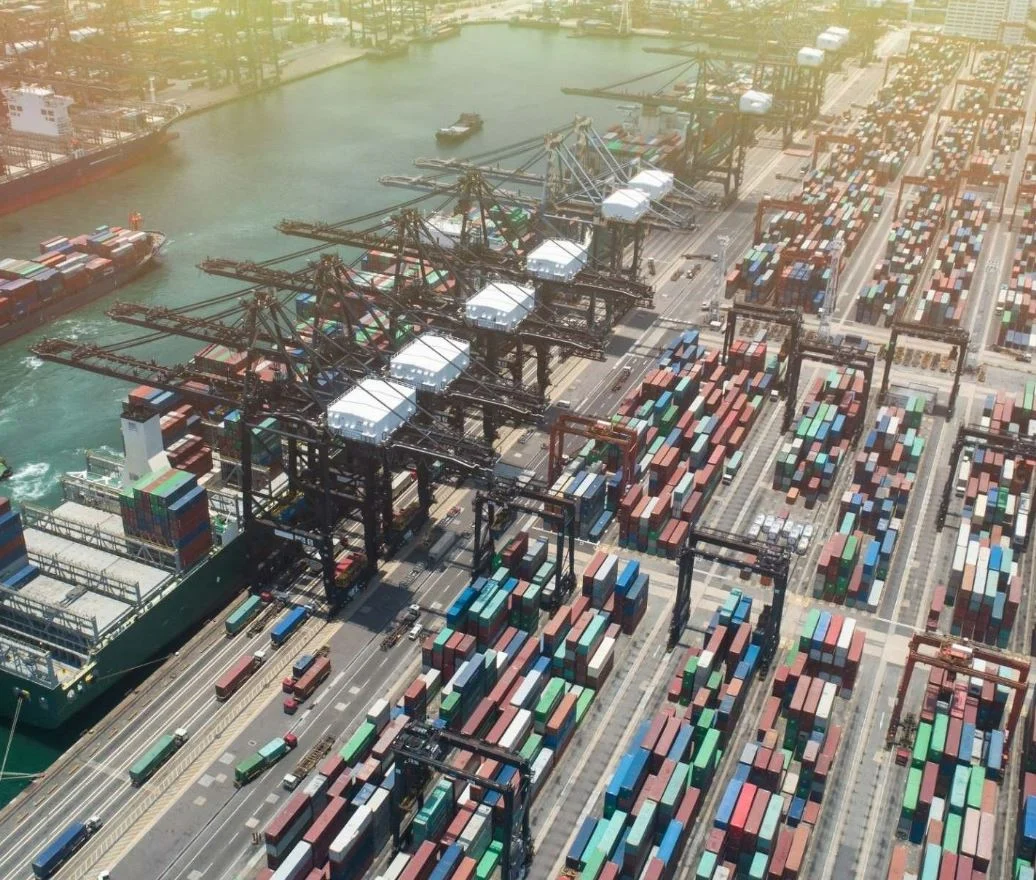
First, about insurance: that’s what we do. In short, we insure either payment risks associated with foreign customers of Dutch exporters or the working capital of those Dutch exporters. To keep it simple: we also make a distinction between insurance and (counter)guarantees. It’s a legally relevant distinction, but don’t worry about it—we can explain it. By the way, my absolute favorite product is a guarantee: the export credit guarantee. But that’s getting off topic.
Credit
Now, about those loans. That sounds like something a bank would do. Often that’s the case, especially with larger export transactions. An exporter enters into a contract with a foreign buyer, and a bank provides a loan that pays the exporter, which the buyer then repays over a relatively long period of time. We then insure against the risk that something might go wrong with that repayment, which means, first, that the bank is willing to provide the credit in the first place, and second, that it will charge a much lower interest rate than it would without insurance. The buyer is happy, the exporter is happy (because of a competitive offer), the bank is happy, and the Dutch business community is happy because of the jobs created.
But that credit doesn’t have to come from a bank. It can also come from the exporter themselves, who allows the foreign buyer to spread the payment over time—in which case we can again insure the risk. This is usually done using what are known as bills of exchange, which I’ll discuss further in another blog post. For smaller amounts, this can be a very good solution. For the exporter, it can be challenging to have to wait longer for their income, but we can help with that as well. We offer products that allow you to have those bills of exchange paid out earlier—at a discount—either through a bank or directly through us.
Please visit our website to explore the options, or contact us!
Visit our product page
So behind those three nouns that sum up our work lies a whole world. A fascinating world that, in the ten years I’ve been part of it, has never bored me for a moment—quite the opposite. Actually, I should just stand in front of those classes of students and give an enthusiastic talk about the real world of exports, the risks, and the solutions. For someone who can even give a 30-minute presentation on budget rules, that should be a piece of cake.