Country / Language
Select your language
export

Bill of exchange

A bill of Exchange is a common form of payment in international trade. It provides clarity regarding payment obligations and can help mitigate risks or strengthen financing. Read on to learn how bills of exchange work and what role Atradius Dutch State Business can play in this process.

What is a Bill of Exchange?

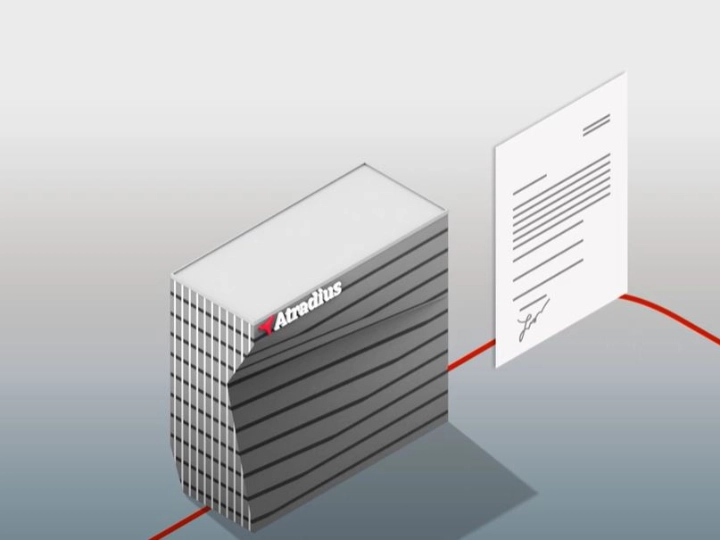
A bill of exchange is a written document in which the debtor undertakes to pay a specified amount to the creditor on a predetermined date. Once the debtor accepts the bill of exchange, a legally binding payment obligation arises. Because a bill of exchange is negotiable, the creditor can sell or transfer the document to another party. This makes the bill of exchange an effective instrument in international trade.

How does it work?

The process begins when the creditor issues a promissory note clearly stating the amount due and the due date. The debtor then confirms that they agree to these terms and thereby accepts the obligation to pay. Once accepted, the promissory note can be used as a negotiable payment instrument that provides certainty regarding the timing of payment and flexibility in the commercial process.

Discounting of bills of exchange by Atradius DSB

If you receive bills of exchange or promissory notes from your customer and your bank is unable to provide you with an advance against them, we can do so on your behalf for amounts up to 5 million euros in a wide range of countries. The same terms and conditions apply as for a direct guarantee.

We have prepared a document with a detailed explanation of the steps, terms, and calculation examples to help you navigate the process of foreign exchange financing. Download the PDF below to discover everything you need to ensure your export transactions run smoothly.

Discounting bills of exchange
How does the exchange of invoices via Atradius DSB work?
Easy export:
image
Advantages

Letter of credit transactions offer benefits to both the exporter and the importer. The exporter knows exactly when payment will be received, which provides predictability when planning revenue. The importer, on the other hand, gains extra time to sell the delivered goods before payment is due, allowing for better cash flow planning.


In addition, when backed by appropriate export credit insurance, a bill of exchange can contribute to improved liquidity. This is because the exporter can receive an advance from a financier or insurer, making the payment available sooner. At the same time, the insurance provides protection against the risk that the debtor may still fail to pay. The advance payment and the eventual claims settlement are separate from one another: if a debtor fails to pay, a claim is assessed under the policy, while any advance payment made earlier is settled in a different manner. This makes a bill of exchange, especially in international trade, a reliable instrument that can support financial stability.


The role of export credit insurers

Atradius DSB plays a key role in mitigating the risk that a foreign buyer will fail to meet its payment obligations. As an export credit insurer, Atradius DSB assesses the debtor’s financial situation and creditworthiness in advance, thereby reducing the risk of non-payment. In addition, export credit insurance provides protection if a debtor fails to pay, regardless of the reason. This makes bills of exchange a safer and more reliable means of payment, especially in transactions involving increased country or debtor risks.


Atradius DSB Advance Payment

When exporters receive bills of exchange or promissory notes from their foreign customers, their bank may be unwilling or unable to finance these documents. Banks have become more reluctant to provide advances in recent years, particularly for smaller export transactions. In such cases, Atradius DSB offers a solution by enabling the discounting of bills of exchange under the DGGF (Dutch Good Growth Fund) and DTIF (Dutch Trade and Investment Fund) schemes.

A condition for this advance payment is that the exporter’s bank confirms in writing that it is unable or unwilling to finance the transaction. Once this confirmation is received and the exporter has export credit insurance, Atradius DSB can discount the bills of exchange and thereby bring forward payment to the exporter.

The process consists of two parts: issuing the policy and subsequently discounting the bills of exchange. Once the export contract has taken effect and the required down payment has been received, the policy can be called upon. As soon as the goods have been delivered and the bills of exchange have been drawn up, the exporter can request Atradius DSB to discount the bills of exchange. Payment is then made after deducting the applicable discount rate.

Documents

To assist exporters in using letters of credit and the associated insurance, Atradius Dutch State Business provides additional documentation and guidance. This makes the process clearer and enables exporters to prepare their transactions fully and correctly.

Related documents
Discounting bills of exchange
954 KB PDF

Looking for a secure solution for your export transaction?

Call +31 (0)20 553 2693 to speak with one of our representatives

Or fill out the form via this link

Didn't find what you were looking for?

Back to the general product overview

Product Overview