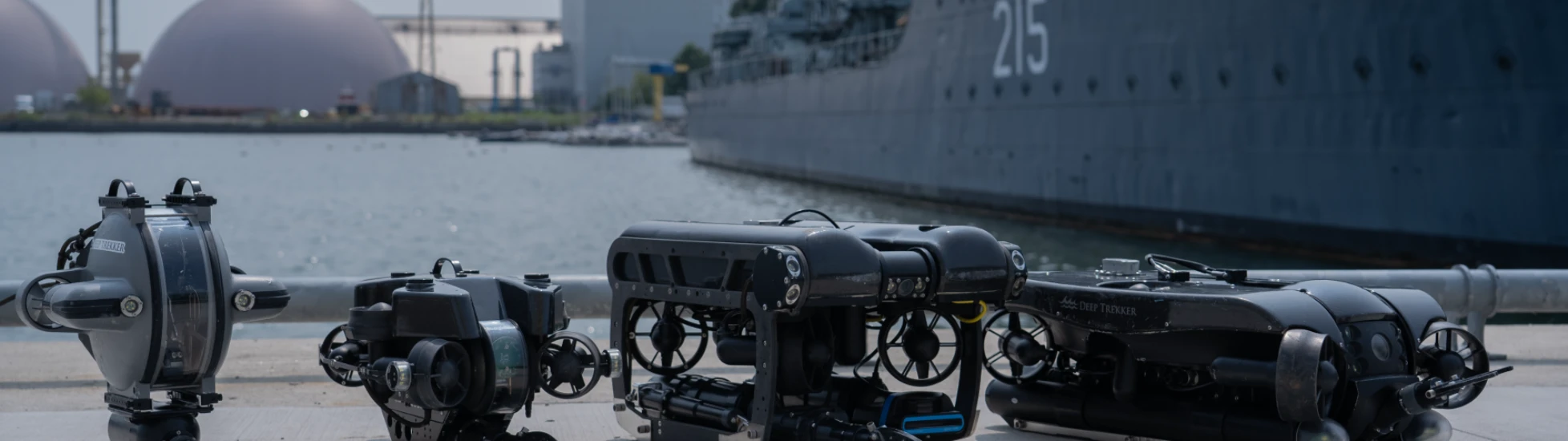
After selling his construction company in 2017, he came across this technology by chance. The link to his previous work was immediately apparent. Karst explored the possibilities in greater depth and eventually introduced the first drones for underwater inspections.
In the early days, he was still a pioneer in the field of underwater inspections and had to introduce organisations to the capabilities of the remotely operated vehicle (ROV). Potential clients first wanted demonstrations of what was possible. They therefore hired Karst to carry out inspections. Initially, this mainly involved Rijkswaterstaat and local councils. Those demonstrations led to the first orders. They now offer solutions for a wide range of complex underwater missions.
How it works...........
An ROV consists of two main components: a controller and the drone. They are connected to each other by a cable. The controller is operated from above the water, whilst the drone carries out the inspection underwater. H2O Drones offers different types of drones, depending on the purpose for which they are used. For example, they have different specifications regarding the maximum depth at which they can be used. This varies from 120 to 1,000 metres. An ROV is always equipped with a camera that records images in the form of video and/or photographs. The battery life of a drone ranges from 3 to 8 hours, and some types of drones operate with a direct power supply via a cable. The major advantage of this is, of course, that there is no limit to the operating time. This is particularly useful when working at great depths and when it takes a long time to get the ROV to its destination.
When is it used?
In principle, anything located underwater can be inspected. The inspections focus primarily on critical infrastructure. This includes, for example, inspecting the riverbed or seabed. Samples can be taken from the sandy seabed for ecological research. Dykes can be checked for cracks. Pipelines can be inspected for defects or irregularities. Fire brigades use ROVs to search for people in distress at sea. In the shipping industry, they are useful for carrying out hull inspections. In industry, they can be used, for example, to inspect water tanks and, if necessary, remove sediment from the bottom. The advantage here is that operations do not need to be halted. The drones can also be used to carry out so-called baseline measurements, after which any changes can be quickly identified during subsequent inspections.
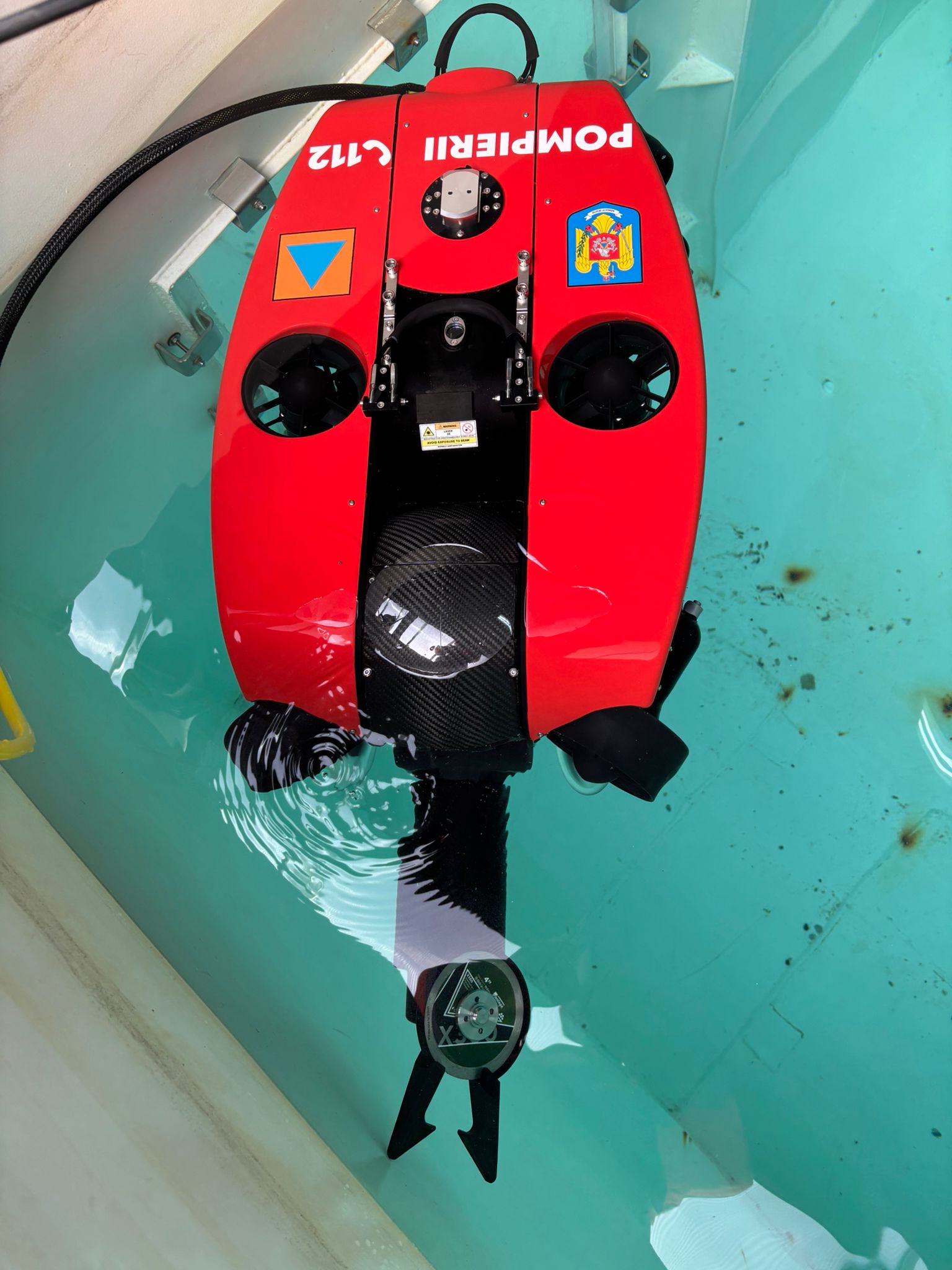
The company recently received an attractive enquiry from Romania. It concerns the supply of 51 Revolution-type underwater inspection drones. These are suitable for underwater inspection purposes, such as inspecting infrastructure including pipelines, cables, etc.
These drones are powered by six propellers and can reach depths of up to 300 metres. They are supplied with an 800-metre cable and a reel. This allows the drone to operate either on battery power (4 hours) or via the cable. Naturally, the personnel who will be operating the ROVs will first receive extensive training from H2O Drones.
Once the drones arrive from Canada, they are then customised in the Netherlands according to the customer’s requirements with sensors, cameras, tools, etc. These components are sourced from various suppliers.
The buyer is the Inspectoratul General pentru Situații de Urgență (IGSU), part of Romania’s Ministry of the Interior. The contract is a framework agreement, under which IGSU may order up to 51 drones subject to pre-agreed conditions. The first delivery comprises 37 drones, to be supplied in 2026. This is a major order for H2O Drones. They produce around 20 to 30 drones per year. The customer requested guarantees. To avoid placing an unnecessary burden on their credit lines with their own bank, they turned to Atradius DSB to have the guarantees underwritten. In addition, the company took out working capital cover to finance the production costs.
Future
In the Netherlands, many companies are now familiar with carrying out underwater inspections using an ROV, but there is still a great deal of potential in the rest of Europe. A sales office has been set up in Cologne to use as a base for capturing the German market. There is already serious interest from various municipalities, such as Berlin, Hamburg, Düsseldorf and Frankfurt.
In addition, there is a growing demand in the market for drones that not only carry out inspections but can also perform tasks such as welding. There are therefore plenty of opportunities in this area too.