
News
Nakkaş–Başakşehir motorway
Building roads, sharing risks: How cooperation among ECAs and banks unlocked financing for the Nakkaş–Başakşehir motorway in Türkiye

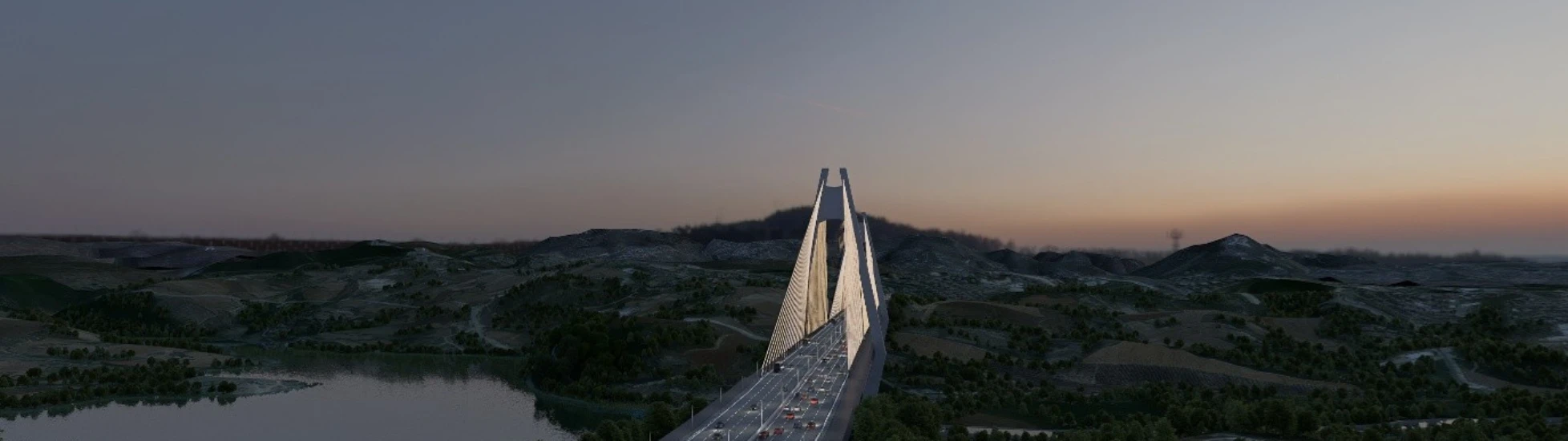
Every day, millions of vehicles crawl through Istanbul’s bottlenecks, throttling the city’s economic pulse. The Nakkaş–Başakşehir section of the Northern Marmara Motorway promises a breakthrough: 31-kilometre corridor with a 1.6-kilometre bridge that will reroute freight, slash congestion and connect directly to Istanbul’s new airport. The over €1.4 billion equity and debt financing behind it required an unusually broad coalition of public and private actors. At its heart were two European export credit agencies — Switzerland’s SERV and the Netherlands’ Atradius DSB. In this interview, Senior Vice President - Export Finance bij SERV, en Alexander Otten, Senior Project Finance bij Atradius DSB explain why their cooperation was decisive and what the project reveals about the future of international infrastructure finance.
Vira Tsymbalyuk: What makes this project strategic is that it doesn’t just add another motorway — it reshapes how an entire city functions. By pulling transit traffic out of Istanbul’s dense urban core, it will dramatically improve air quality, cut noise pollution and reduce commuting times for millions. At the same time, the direct airport connection strengthens Istanbul’s role as an international hub. In other words, it is not only an infrastructure project but an economic catalyst, improving the city’s competitiveness for decades to come.
Alexander Otten: I would add that the strategic impact extends far beyond Istanbul. This section closes the last gap in the Northern Marmara Motorway, creating a continuous east–west corridor between Europe and Asia. For trade and industry, that is transformative. It enhances supply-chain resilience at a moment when global logistics are under strain, and it demonstrates that even in a volatile economic environment, Türkiye can still attract large-scale international financing. That combination of local benefit and global significance is what makes this project stand out.
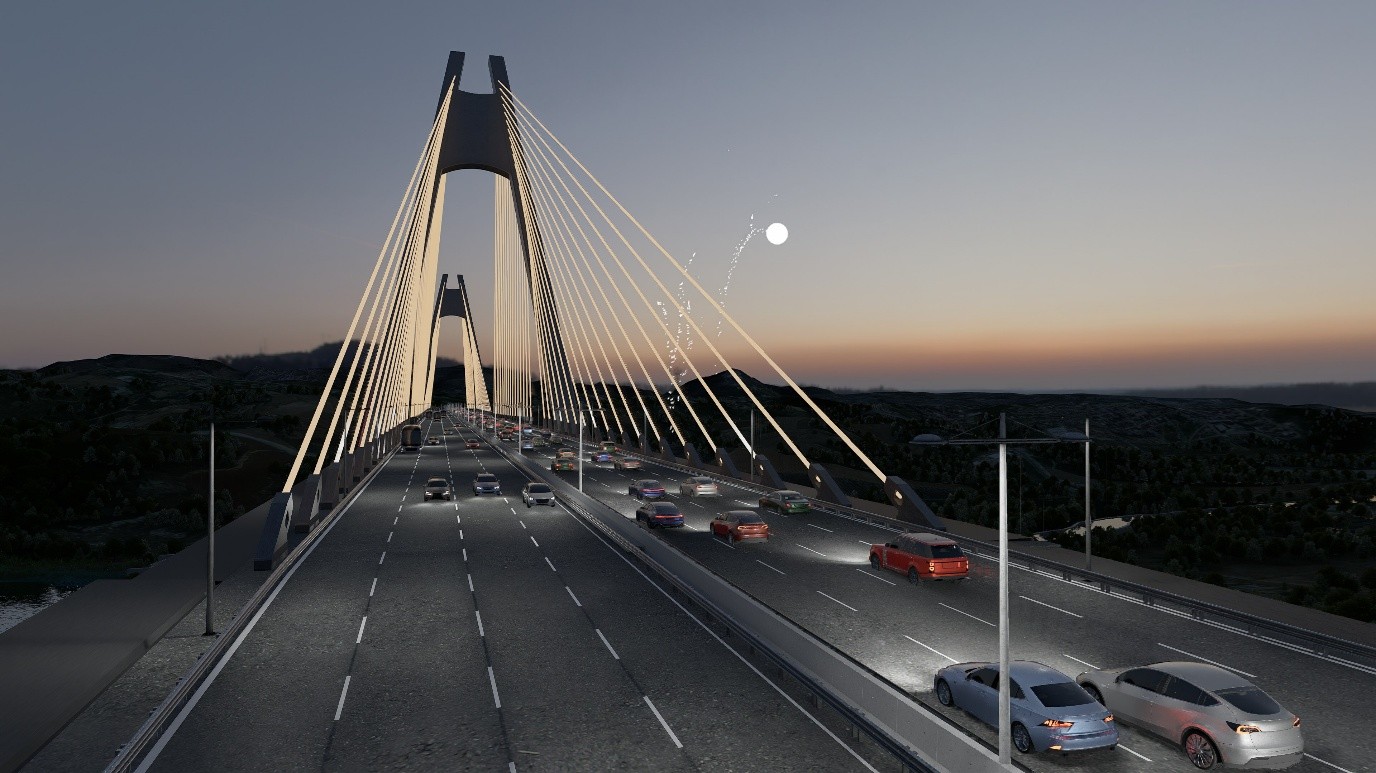
Vira Tsymbalyuk: Our involvement came through Heitkamp Construction Swiss, tasked with design and construction of four viaducts and procuring specialised materials and equipment for the Nakkaş–Başakşehir section. What may look like a routine supply contract was in fact critical to keeping the works on schedule. In Türkiye’s volatile market, such exports faced significant counterparty and payment risk. By providing cover, SERV allowed the Swiss supplier to participate securely, turning a fragile supply link into a reliable contribution to a project of global scale.
Alexander Otten: Atradius DSB became involved via Ballast Nedam International Projects. Ballast Nedam is not just a Dutch contractor but a company with a long track record of delivering technically demanding and politically sensitive projects. Its participation in the motorway underscored how Dutch expertise continues to play a role in projects of international scale. Our responsibility was to make sure that expertise could be deployed without exposure to financial uncertainty. That is the essence of an export credit agency: we take on risks the private market cannot, allowing national companies to commit with confidence to projects that transform economies and regions.
Alexander Otten: Delivering a motorway through the heart of Europe’s most populous city inevitably raised environmental and social concerns. Land acquisition, resettlement and the impact on surrounding communities were especially sensitive, and they required rigorous scrutiny from all parties involved.
Vira Tsymbalyuk: Exactly. In October 2022, construction was even suspended to ensure compliance with international standards on resettlement and expropriation. Only after corrective measures were implemented could work resume in early 2024. At the same time, Türkiye’s economic context added another layer of risk: persistent inflation, exchange-rate volatility and market uncertainty complicated both procurement and financing. Those were not marginal issues — they affected every stage of the project.
Alexander Otten: The decisive factor in overcoming these risks was alignment. Large infrastructure projects often involve a crowded table of lenders, sponsors and agencies, each with their own priorities. Without coordination, that complexity quickly turns into paralysis. By consistently presenting a single position, SERV and Atradius DSB signalled to the financial community that the risks were not only identified but shared and underwritten collectively. That changed the tone of the negotiations. It gave banks the confidence to continue disbursing and sponsors the assurance that the project would not be derailed by conflicting demands. In an environment of economic volatility and heightened scrutiny, that unity was the reason the project stayed on track.
Vira Tsymbalyuk: Our contributions were distinct but interdependent. Atradius DSB provided insurance cover for a banking consortium that extended around €200 million in loans, while SERV supported the project with roughly €240 million in buyer credit insurance, half of it reinsured by the Polish ECA KUKE. By covering different layers of the financing, we ensured that risks were spread rather than concentrated. That diversification gave the entire structure resilience in a volatile market.
Alexander Otten: Precisely. The strength of the arrangement was not in the scale of each contribution, but in how they fitted together. Atradius DSB secured the commercial lenders, SERV anchored the buyer financing, and KUKE shared the exposure. What could have been a fragile financing became a balanced framework that gave banks and Nakkas shareholders the confidence to release over €1.4 billion into an uncertain economy.
Vira Tsymbalyuk: At first, the sheer number of stakeholders made coordination difficult. We had commercial banks, three ECAs, ICIEC, international advisers, Turkish and Korean sponsors — each with different priorities. Without structure, that diversity risked turning into paralysis. The turning point was the creation of a coordination hub, a platform where all parties could meet on equal terms. Once that was in place, the complexity became an asset: every actor could bring its expertise without slowing the process.
Alexander Otten: And the hub was not only about communication; it imposed discipline. Decisions could be made more quickly, conflicting positions resolved earlier, and risks monitored collectively. In deals of this size, governance is every bit as important as capital. Without it, even the best-structured financing can collapse under its own weight.
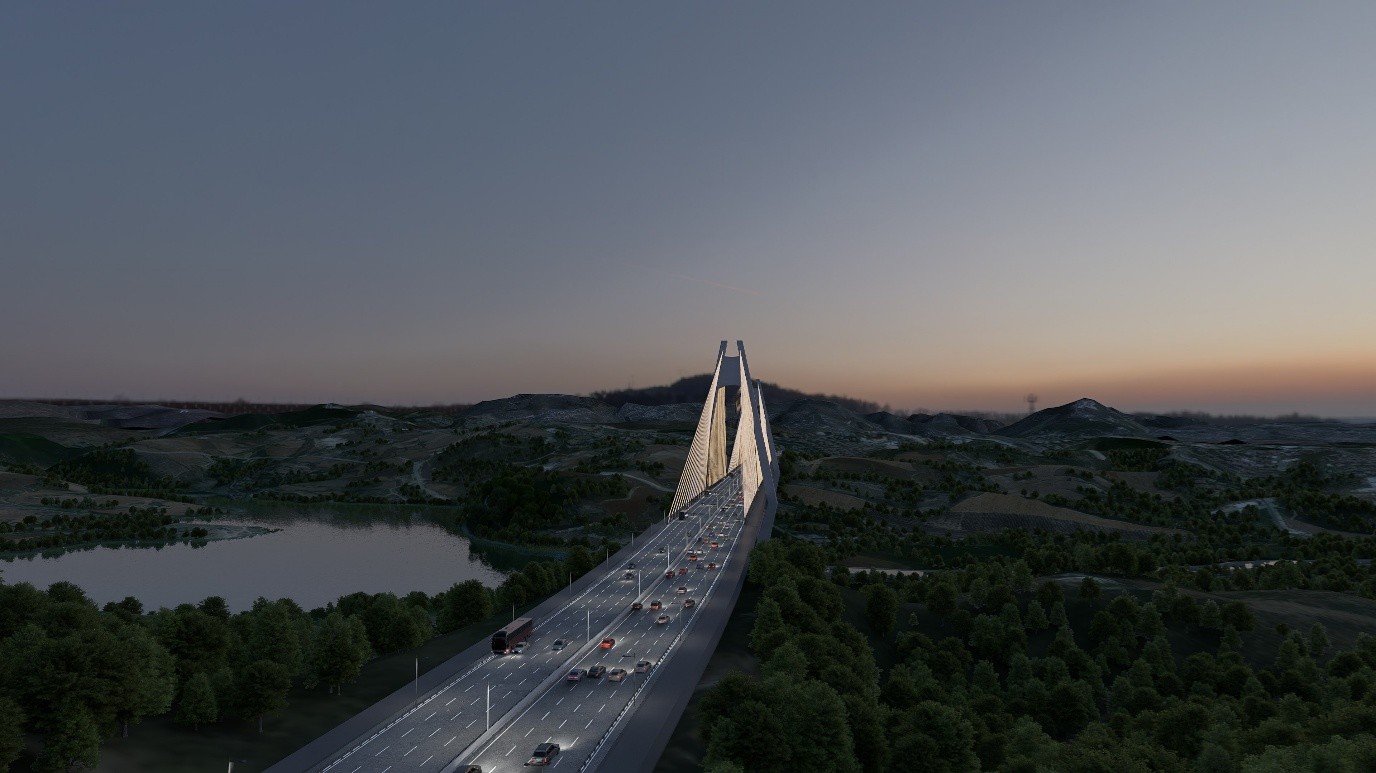
Alexander Otten: The cooperation with SERV was decisive. From the start, we aligned our positions and spoke with one voice. That unity gave export credit agencies real influence in negotiations. Instead of being marginal players, we became active partners shaping the outcome.
Alexander Otten: The central lesson is that alignment must begin early. In a financing of this complexity, every week of hesitation at the outset compounds into months of delay downstream. Establishing common ground among lenders and agencies from the very beginning is not simply efficient; it is decisive. A second lesson is the indispensable role of independent advisers. Their neutrality and technical expertise impose the discipline that keeps all participants working from the same reality. This project made clear that in modern infrastructure finance, governance and transparency are as critical to success as capital itself.
Vira Tsymbalyuk: My perspective is broader. Large international projects are now exposed to a convergence of systemic risks: geopolitical shocks, shifting national interests, fragile supply chains. No single export credit agency, however strong, can insulate a project against disruptions of that magnitude. But when ECAs act collectively, we transform volatility into something navigable. That is what our cooperation with Atradius DSB achieved: not just risk-sharing on a motorway, but a demonstration of how agencies can multiply their effectiveness by working in concert. For me, that is the blueprint for the future.
The Nakkaş–Başakşehir motorway has become more than a transport link; it is a demonstration of how complex international projects can be financed and delivered amid volatility and scrutiny. As Alexander Otten observed, “the partnership between Atradius DSB and SERV turned export credit agencies from marginal participants into central architects of the deal.” That transformation mattered: by aligning their positions and speaking with one voice, the agencies gave lenders confidence, reassured sponsors, and enabled an over €1.4 billion investment to move from ambition to reality.
For Vira Tsymbalyuk, the project embodies a wider lesson. “Large-scale infrastructure is now shaped as much by geopolitics and fragile supply chains as by engineering and finance,” she reflected. “No export credit agency can carry that weight alone. But when we act collectively, uncertainty becomes possibility.”
Together, their perspectives point to the same conclusion. The Nakkaş–Başakşehir motorway is not just a story of roads and bridges, but of institutions learning to turn risk into resilience. In an era defined by volatility, unity among export credit agencies is more than a strength — it is the condition for building what otherwise could not be built.
Would you like to learn more about how the products of Atradius Dutch State Business can support the growth of your company?
Visit our product page for more information.
